
Introduction
Health insurance is an important part of protecting your health and financial future. Medical emergencies can happen at any time, and hospital expenses can sometimes become very expensive. Without proper health insurance, paying for medical treatment may become a major financial burden for individuals and families.
However, many people avoid purchasing health insurance because they think it is too expensive. The good news is that there are different insurance plans available to suit different budgets and healthcare needs.
Choosing affordable health insurance does not mean selecting the cheapest policy. It means finding a plan that provides useful medical coverage at a price you can comfortably afford.
Before buying a policy, you should understand its benefits, premiums, coverage limits, exclusions, and other important conditions.
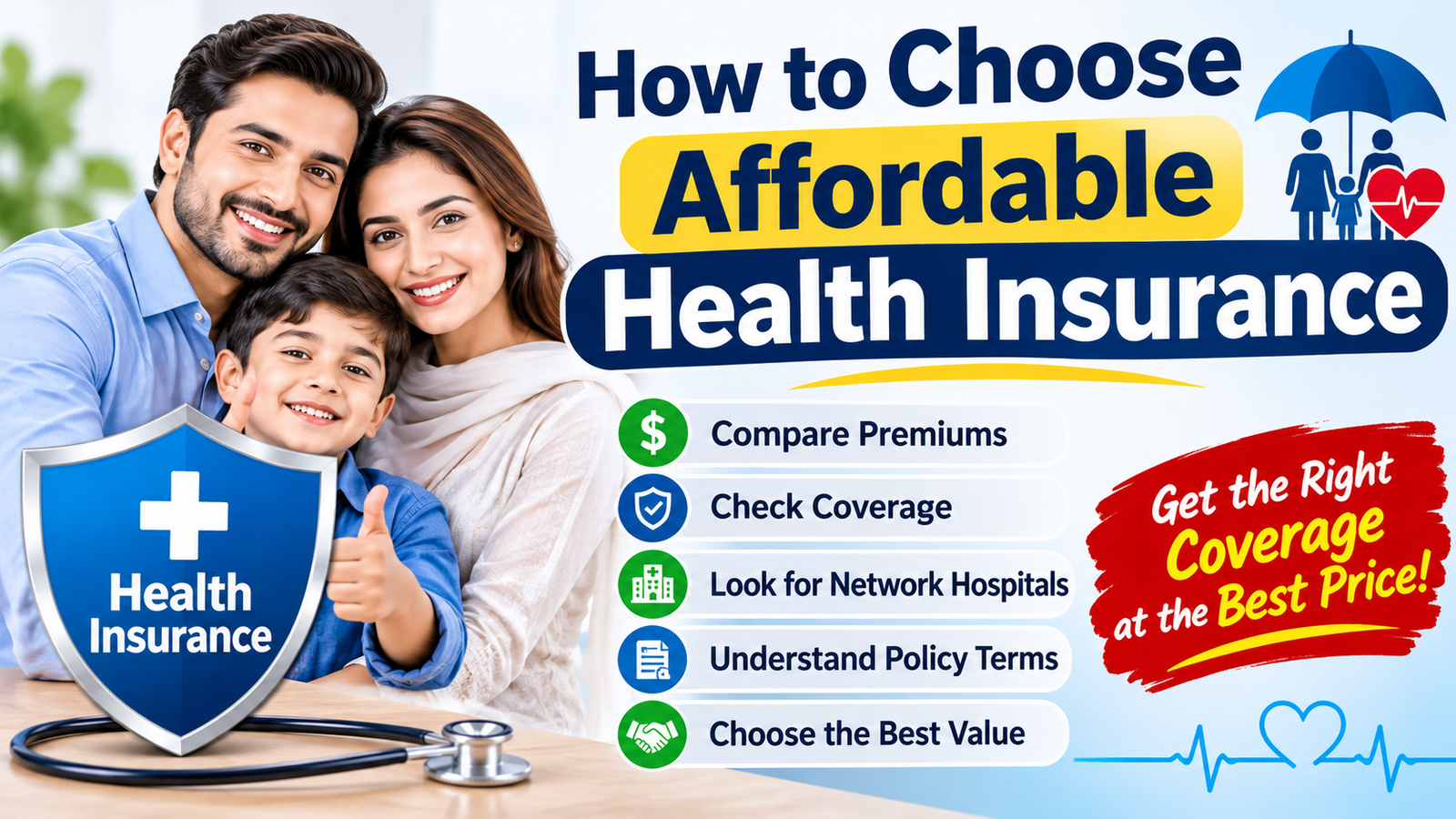
In this article, we will explain how to choose affordable health insurance, what factors to consider, and how to save money while protecting your health.
1. Understand Your Healthcare Needs
The first step in choosing affordable health insurance is understanding your healthcare needs.
Every person has different medical requirements. A young and healthy individual may need different coverage compared to an older person or someone with an existing medical condition.
Before selecting a policy, consider the following questions:
- How many people need health insurance?
- Do you have any existing medical conditions?
- Do you need regular doctor visits?
- Do you need maternity coverage?
- Do you have children or elderly parents?
- Which hospitals do you prefer?
Understanding your needs will help you avoid paying for unnecessary benefits.
Choose a plan that provides suitable protection for your personal or family situation.
2. Compare Different Health Insurance Plans
One of the best ways to find affordable health insurance is to compare multiple insurance plans.
Different insurance companies offer different premiums, benefits, coverage limits, and policy conditions.
Do not purchase the first policy you find. Take time to research several options.
When comparing plans, look at:
- Monthly or annual premiums.
- Total coverage amount.
- Hospitalization benefits.
- Emergency treatment coverage.
- Deductibles and copayments.
- Hospital networks.
- Waiting periods.
- Policy exclusions.
Comparing these details can help you identify a policy that offers good value for money.
Remember that a low-priced plan is not always the best choice.
3. Choose the Right Coverage Amount
The coverage amount is the maximum amount an insurance company may pay for eligible medical expenses during a specified policy period.
Choosing the right coverage amount is very important.
If your coverage is too low, it may not be enough to pay for expensive hospital treatment.
On the other hand, choosing unnecessarily high coverage may increase your insurance premium.
Consider your location, family size, age, medical history, and the cost of healthcare services in your area.
For example, people living in areas with expensive private hospitals may need higher coverage than those who mainly use affordable healthcare facilities.
Try to balance your financial budget with your expected healthcare needs.
4. Understand Health Insurance Premiums
A premium is the amount of money you pay to an insurance company to keep your health insurance policy active.
Depending on the insurance provider, you may pay premiums monthly, quarterly, or annually.
The premium amount depends on several factors, including:
- Your age.
- Medical history.
- Number of insured family members.
- Selected coverage amount.
- Type of insurance policy.
- Additional benefits.
For example, a basic insurance plan may have a lower premium but offer fewer benefits.
A comprehensive policy may cost more but provide wider medical coverage.
Before purchasing insurance, calculate how much you can comfortably spend on premiums without affecting your other important expenses.
5. Check the Deductible and Copayment
Deductibles and copayments can affect the total cost of your health insurance.
A deductible is the amount you must pay yourself for eligible medical expenses before the insurance company begins paying its share.
For example, if your policy has a deductible of $300, you may need to pay the first $300 of covered expenses before insurance coverage applies.
A copayment is a fixed amount you pay for a particular medical service.
Some policies also include coinsurance, which means you pay a percentage of the eligible medical expenses.
Plans with higher deductibles or copayments may have lower premiums. However, they can increase your personal expenses when you receive treatment.
Choose these options carefully according to your financial situation.
6. Look for Family Health Insurance Plans
If you have a spouse and children, family health insurance may be a convenient and affordable option.
A family health insurance plan can cover multiple eligible family members under one policy.
Some family plans use a shared coverage amount, which means all insured members can use the available coverage according to the policy rules.
This can make policy management easier because you may only need to manage one premium payment and renewal date.
However, compare family coverage with separate individual policies before making a decision.
Consider the age and medical needs of every family member.
7. Check the Hospital Network
The hospital network is another important factor when choosing affordable health insurance.
Many insurance companies work with selected hospitals, clinics, and healthcare providers.
If you receive treatment at a hospital within the approved network, you may be able to use cashless treatment services, depending on your policy.
This means the insurance company pays eligible expenses directly to the hospital after approval.
Before purchasing a policy, check whether reliable hospitals near your home are included in the network.
Also, understand whether treatment outside the network is covered and whether additional costs apply.
Choosing a plan with suitable hospitals can make medical treatment easier and reduce unexpected expenses.
8. Read the Policy Exclusions Carefully
Every health insurance policy has certain exclusions.
Exclusions are medical treatments, services, or situations that the insurance company does not cover.
Common exclusions may include:
- Certain cosmetic procedures.
- Experimental medical treatments.
- Non-covered medicines.
- Specific pre-existing conditions during waiting periods.
- Personal or non-medical expenses.
- Treatments outside the policy’s approved coverage.
Some policies also have limits on specific treatments or hospital services.
Never ignore the exclusions section when purchasing health insurance.
A policy may appear affordable, but limited coverage could create financial problems when you need medical treatment.
Always read the complete policy documents before making a final decision.
9. Understand Waiting Periods
A waiting period is the amount of time you must wait after purchasing an insurance policy before certain benefits become available.
For example, some health insurance plans have waiting periods for maternity benefits, pre-existing medical conditions, or specific treatments.
This means you may not be able to claim expenses for certain conditions immediately after purchasing the policy.
Waiting periods differ between insurance companies and policies.
If you already have a medical condition or expect to need specific treatment, check these conditions before buying insurance.
Understanding waiting periods can help you avoid unexpected claim problems.
10. Look for Preventive Healthcare Benefits
Preventive healthcare helps identify health problems before they become serious.
Some insurance plans include preventive services such as:
- Routine health checkups.
- Blood pressure monitoring.
- Blood sugar tests.
- Certain vaccinations.
- Health screenings.
- Wellness programs.
These benefits may help you monitor your health and identify potential problems early.
However, preventive services are not included in every policy.
Check which services are covered and whether they have separate limits or conditions.
Choosing a plan with useful preventive benefits can provide additional value.
11. Avoid Buying Insurance Only Because of Advertisements
Insurance advertisements often highlight attractive benefits and low premium prices.
However, advertisements may not explain every policy condition.
Before purchasing health insurance, research the insurance company and read its official policy documents.
Check customer reviews, claim procedures, hospital networks, and available customer support.
You should also understand how the company handles complaints and rejected claims.
Never purchase a policy only because an advertisement promises large discounts or attractive benefits.
Make your decision based on complete and reliable information.
12. Maintain a Healthy Lifestyle to Manage Costs
Your lifestyle can affect your overall healthcare needs.
Healthy habits may help reduce the risk of certain medical conditions and support long-term well-being.
Try to follow these simple habits:
Eat Healthy Food: Include fruits, vegetables, whole grains, and nutritious foods in your daily meals.
Exercise Regularly: Walking, cycling, and other physical activities can improve your overall health.
Avoid Smoking: Smoking increases the risk of several serious health problems.
Get Enough Sleep: Proper sleep supports physical and mental health.
Manage Stress: Meditation, relaxation, and spending time with loved ones can improve emotional well-being.
Attend Medical Checkups: Regular checkups can help identify potential health problems early.
A healthy lifestyle cannot guarantee lower insurance premiums, but it can support better health and reduce the risk of some medical expenses.
13. Check the Insurance Company’s Claim Settlement Process
An affordable health insurance plan is useful only when you understand how to receive its benefits.
Before purchasing a policy, learn about the company’s claim settlement process.
Find out:
- How to submit a medical claim.
- Which documents are required.
- How long claim processing usually takes.
- Whether cashless hospitalization is available.
- How to contact customer support.
- What happens if a claim is rejected.
You should also check the insurer’s claim performance using reliable and relevant information.
A clear and convenient claim process can make a big difference during a medical emergency.
14. Review Your Health Insurance Policy Regularly
Your healthcare needs may change over time.
For example, you may get married, have children, develop a medical condition, or experience changes in your financial situation.
Because of these changes, you should review your insurance policy regularly.
Check whether your current coverage is still suitable for your needs.
You may need to increase your coverage, add family members, or consider different benefits.
Before renewing or changing your policy, compare available options and understand whether switching could affect waiting periods or existing benefits.
Regular reviews help ensure that your insurance continues to provide suitable protection.
15. Common Mistakes to Avoid When Choosing Affordable Health Insurance
Many people make simple mistakes when purchasing health insurance.
Here are some mistakes you should avoid:
Choosing the Cheapest Policy: A cheap policy may have limited benefits and higher out-of-pocket costs.
Ignoring Medical History: Always provide accurate information about existing medical conditions.
Not Checking Coverage Limits: Some policies have separate limits for hospital rooms, treatments, and medical services.
Ignoring Exclusions: Understand what is not covered before purchasing insurance.
Forgetting Renewal Dates: Missing renewal deadlines may interrupt your coverage.
Not Comparing Providers: Compare different insurance companies before making a final decision.
Avoiding these mistakes can help you choose a better health insurance plan.
Conclusion
Choosing affordable health insurance is an important decision for protecting your health and financial future.
The right insurance policy should provide suitable medical coverage without creating unnecessary financial pressure.
Before purchasing a plan, understand your healthcare needs, compare different insurance companies, check coverage amounts, and review premiums.
Pay special attention to deductibles, copayments, hospital networks, waiting periods, and policy exclusions.
Remember that affordable health insurance does not simply mean choosing the lowest-priced plan. It means finding the right balance between cost and medical protection.
Take your time, read the policy documents carefully, and choose a plan that matches your budget and healthcare requirements.
A suitable health insurance policy can help protect your savings and provide peace of mind when unexpected medical problems arise.





Leave a Reply